Style
How to Choose the Perfect Dining Table for Your Home
Oct
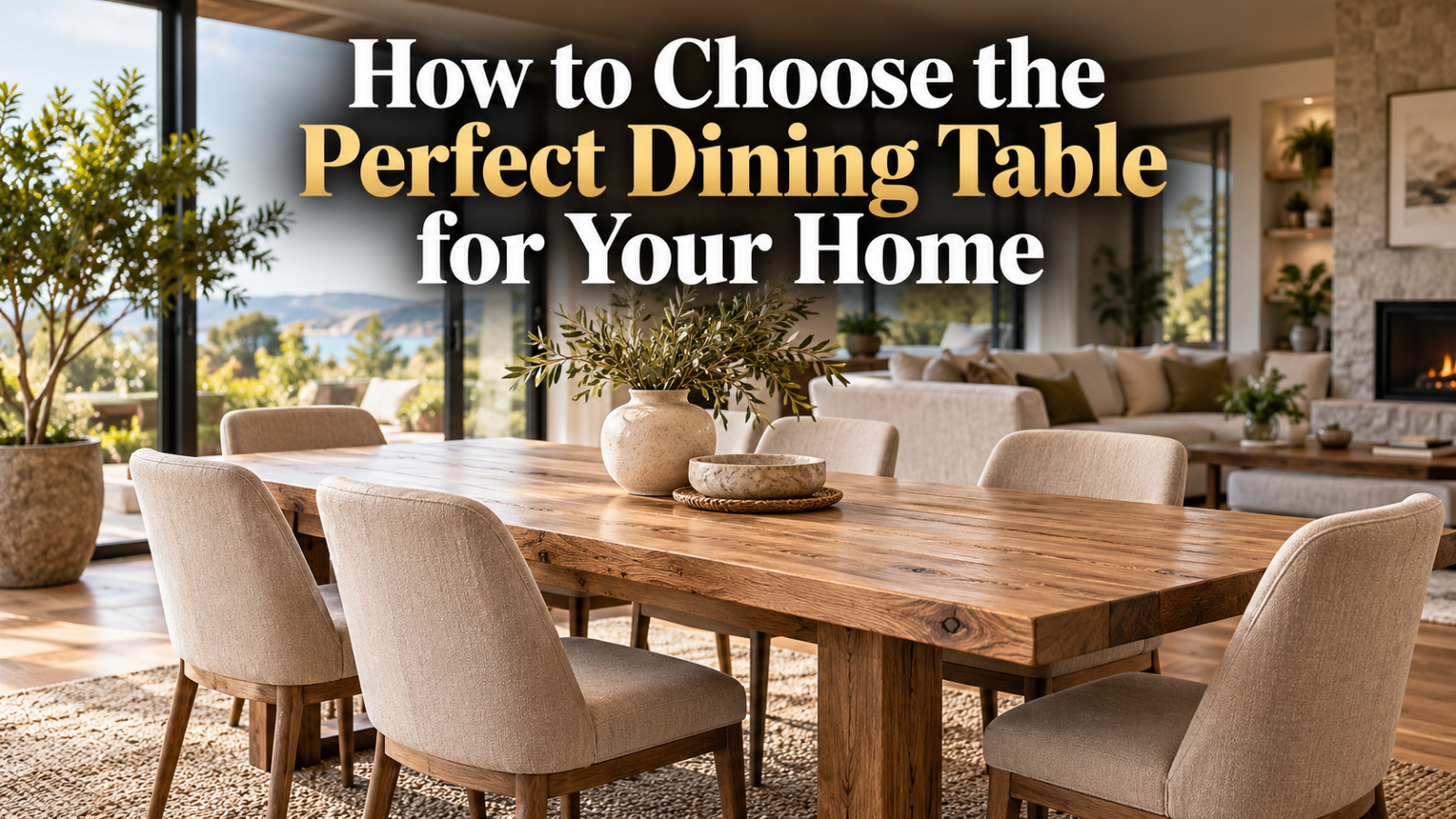
A dining table is far more than a piece of furniture. It is the stage for everyday breakfasts, Sunday roasts, homework sessions, and celebrations that stretch long into the evening. Yet choosing the right one can feel overwhelming when you are faced with so many shapes, sizes, materials, and finishes.
The key to how to choose the perfect dining ttable for your home is to start with practical measurements and honest daily habits before you fall in love with a look. This guide from Evans of High Wycombe draws on decades of British furniture making experience to walk you through every decision that matters, from clearance rules and seating capacity to solid oak construction and long term care.
The most common mistake buyers make is choosing a table by appearance alone, then trying to force it into a space that cannot accommodate it. A table that is too large makes a room feel cramped and makes chairs difficult to pull out. A table that is too small looks lost and fails to serve its purpose. The smarter approach begins with hard numbers: measure your dining area, subtract clearance on every side, and only then begin exploring styles. That single change in sequence will save you from the most expensive error in dining room furniture buying.
When you invest in dining room furniture from a specialist, you are not simply buying a surface on legs. You are buying structural engineering dressed in timber. The joinery, the base design, the finish, and the quality of the wood all determine whether the table will survive years of weight, heat, moisture, and daily life or begin to show wear within months. This guide exists to cut through the noise and give you clear, actionable information so that your choice becomes a piece you treasure rather than one you eventually regret.
Start with Space and Seating Capacity
Before you consider shape or finish, you must establish the maximum footprint your room can hold. The industry rule is simple but frequently ignored: leave at least ninety centimetres between the edge of the table and any wall, cabinet, or piece of furniture on every seated side. This allows chairs to be pulled out and people to walk behind seated diners. In practice, one metre is even better for comfortable movement. To calculate your maximum table size, measure the length and width of your dining area and subtract two metres from each dimension, one metre for clearance on each side. The resulting figures are your absolute maximum table dimensions.
Seating capacity follows a reliable formula. Allow sixty to seventy centimetres of table length per person for comfortable elbow room. A one hundred and eighty centimetre table seats four to six people comfortably. A two hundred centimetre table seats six. A two hundred and forty centimetre table seats eight. Push the allowance down to fifty five or sixty centimetres per person and you can squeeze in more for special occasions, but daily comfort suffers. Decide honestly how many people you will seat regularly, not how many you hope to impress once a year. Width matters too. A table narrower than ninety centimetres makes serving dishes awkward. One hundred centimetres is the sweet spot for most homes because it provides ample space for place settings and food without making the table too deep to reach across.
Use the table below as a quick reference for standard rectangular dining table sizes and the room dimensions they require.
| Seating Capacity | Typical Table Size | Minimum Room Size for Comfortable Clearance |
|---|---|---|
| Four people | 120cm x 75cm | 2.7m x 2.7m |
| Six people | 150cm to 180cm x 90cm | 3.5m x 3.0m |
| Eight people | 240cm x 100cm | 4.5m x 3.5m |
The direct answer to the sizing question is this: choose the largest table that still leaves at least ninety centimetres of clear space on every side where people will sit. A table that fits the floor plan but leaves no room to push a chair back is a table that will frustrate everyone who uses it.
Choose the Right Shape for Your Room and Lifestyle
The shape of your dining table affects both how the room feels and how people interact around it. Rectangular tables are the most common and most versatile. They suit both formal dining rooms and open plan kitchens, provide the most efficient use of floor space, and can fit neatly against a wall when not fully extended. The Albion Dining Table from Evans of High Wycombe exemplifies this shape’s adaptability. Available in two hundred and forty centimetre and two hundred centimetre lengths, its gently rounded tabletop softens the formal geometry of a rectangle while maintaining the practical advantages of a clear, linear seating arrangement.
Round tables create a more intimate and democratic dining experience. Everyone sits equidistant from the centre, which encourages conversation and removes the sense of hierarchy that can come with a rectangular top. They work brilliantly in square rooms or smaller spaces where a rectangular table would feel imposing. The trade off is that a round table seating six requires a larger diameter than a rectangular table seating the same number, so round tables are less space efficient in compact rooms. Square tables are useful for compact dining areas or breakfast nooks and create a cosy, contained feel, but they limit seating capacity relative to their footprint. Oval tables offer a compromise, providing the seating capacity of a rectangular table with the softer visual lines of a round table. They are particularly effective in narrow rooms where sharp corners would obstruct movement.
| Shape | Best Suited To | Key Advantage | Key Consideration |
|---|---|---|---|
| Rectangular | Rectangular rooms, larger families, formal and open plan spaces | Most efficient use of floor space and highest seating capacity | Can dominate small rooms if clearance is insufficient |
| Round | Square rooms, smaller spaces, intimate gatherings | Encourages conversation and has no hierarchical seating | Requires a larger footprint for the same seating count |
| Square | Compact dining areas and breakfast nooks | Creates a cosy, contained feel | Limited seating capacity for the floor space used |
| Oval | Narrow rooms and medium to large gatherings | Combines rectangular seating capacity with softer visual lines | Slightly less surface area than a rectangular table of the same length |
Select a Material That Matches Your Daily Life
Material choice is where many buyers get lost, but for a dining table that will see daily use, one material consistently outperforms the rest: solid oak. Oak is exceptionally strong, durable, and generally more affordable than premium alternatives such as walnut. Its visible grain pattern takes stains beautifully and develops a rich patina over decades of use. White oak offers a grey brown tone that works across almost every interior style, while red oak provides a warmer, slightly reddish cast. Walnut is undeniably beautiful and carries an air of luxury, but it is slightly softer than oak and more prone to minor scratches in high traffic areas. For a table that must withstand everyday life, oak offers the superior balance of durability, aesthetics, and value.
The distinction between solid oak and oak veneer is critical. Solid oak means the entire piece is constructed from oak timber. Veneer means a thin layer of oak is applied over a cheaper core material. Solid oak can be sanded and refinished multiple times over its life, developing character with age. Veneer cannot be refinished and develops chips rather than patina. A solid oak dining table is an investment that can last generations, while a veneered table is a disposable item dressed in nice clothing. The Franklin Dining Table is crafted from solid white oak for lasting durability, and the Huxley Dining Table uses solid American white oak finished in a rich smoked oak tone, making both pieces genuine long term investments.
| Material | Durability | Maintenance | Best For | Key Limitation |
|---|---|---|---|---|
| Solid oak | Excellent; can be sanded and refinished | Moderate; dust regularly and oil or wax periodically | Daily family use and long term investment | Higher initial cost than veneer or composite |
| Oak veneer | Good surface but cannot be refinished | Low to moderate | Budget conscious buyers and occasional use | Chips rather than develops patina over time |
| Marble | Good but can stain or etch if unsealed | High; requires sealing and careful cleaning | Formal dining and luxury interiors | Heavy, expensive, and vulnerable to acidic spills |
| Glass | Good surface but shows smudges immediately | Moderate; requires frequent polishing | Small apartments and visually light interiors | Visible marks and less warmth than wood |
| Ceramic or sintered stone | Excellent stain and scratch resistance | Low; wipes clean easily | Busy family homes and multi use tables | Chipped edges are difficult to repair |
Consider Height, Base Design, and Seating Style
Standard dining table height is approximately seventy seven centimetres, which pairs correctly with dining chairs that have a seat height of forty five to forty eight centimetres. Any variation from this standard requires custom seating, which limits your options and increases costs. Counter height tables sit at around eighty six to ninety one centimetres and are paired with stools or chairs with a seat height of sixty one to sixty six centimetres. These can work well in open plan kitchens where the dining table doubles as a casual eating area or food preparation space, but they are less comfortable for long, formal dinners because most people prefer to sit lower for extended meals.
The base of the table determines how comfortably people can sit around it. Four leg designs provide excellent stability and a classic look, but corner legs can restrict seating, particularly at the ends of the table. Pedestal bases solve this problem by using a central column that leaves the entire perimeter clear for seating. The Huxley Dining Table features a distinctive star base leg that is expertly engineered to provide excellent stability while maximising legroom and seating space, allowing chairs to be positioned comfortably around the entire table. Trestle bases offer a rustic, farmhouse aesthetic and create a sturdy foundation, but the supports can interfere with seating at the ends. Cross leg or X frame bases provide a sculptural focal point while delivering exceptional stability. The Franklin Dining Table employs this design to create a confident yet elegant presence without overwhelming the space.
Seating choice is equally important. Dining chairs offer individual comfort, back support, and a defined place for each person. Benches offer flexible seating, tuck fully underneath the table when not in use, and create a relaxed, streamlined look. However, backless benches offer limited lumbar support for long dinners, and older relatives or anyone with limited mobility may find chairs with arms easier to use. A popular approach is to combine chairs on one side with a bench on the other, giving guests the comfort of a chair while keeping the family side flexible and space efficient. The Albion Bench and Franklin Bench are designed to complement their respective tables perfectly and provide this kind of versatile seating solution.
Step by Step Guide to Selecting Your Table
Following a structured process prevents emotion from overriding practical considerations. Use this sequence to move from measurement to final choice with confidence.
Step One: Measure the Room and Establish Clearance
Measure the length and width of your dining area. Subtract one metre from each dimension to account for clearance on both sides. The resulting figures are your maximum table footprint. Mark the proposed table area on the floor with tape so you can physically feel how the space will work before you commit.
Step Two: Decide Your Regular Seating Number
Count the people who will use the table on a typical day, not the maximum number you might host once a year. Allow sixty to seventy centimetres of table length per person. If you frequently entertain, consider an extending table or a size that can accommodate occasional extra guests without feeling empty on ordinary days.
Step Three: Match the Shape to the Room and Your Hosting Style
If your room is rectangular, a rectangular or oval table will use the space most efficiently. If the room is square, a round or square table will feel more natural. If conversation and intimacy are priorities, choose round or oval. If you regularly host large gatherings and need maximum seating, choose rectangular.
Step Four: Choose a Material Based on Use and Maintenance
For daily family use, solid oak is the most practical long term choice because it can be repaired and refinished. For occasional formal dining, marble or glass may appeal aesthetically but require more careful maintenance. If the table will double as a homework station or workspace, prioritise a surface that resists stains and scratches.
Step Five: Confirm Height and Base Compatibility with Your Chairs
Standard height tables at seventy seven centimetres suit standard dining chairs. Check that the base design allows chairs to tuck in comfortably on all sides, especially at the ends of the table. If you plan to use a bench, ensure the base does not obstruct the bench position.
Step Six: Check Joinery and Construction Quality
Look for dovetail joints, mortise and tenon connections, and dowelled construction, which indicate careful work. Staples, glue alone, or visible screws suggest corners have been cut. Solid wood expands and contracts with changes in humidity, so well constructed tables allow for this movement without compromising stability.
Final Checklist Before You Buy
Use this checklist to confirm that every practical detail has been addressed before you make your purchase.
- The table leaves at least ninety centimetres of clearance on every seated side.
- The table seats your regular household comfortably, with room for occasional extra guests if needed.
- The shape suits the proportions of your room and your hosting style.
- The material matches your daily use and willingness to maintain it.
- The table height pairs correctly with your chosen chairs or benches.
- The base design allows comfortable seating on all sides, including the ends.
- The construction uses solid joinery rather than staples or glue alone.
- The finish is appropriate for your lifestyle and can be maintained with accessible products.
- The table complements the existing undertones and style of your home without being overly trend driven.
- You have considered an extending table if your space is limited but your occasional guest list is longer.
Care and Longevity for Solid Oak Tables
A solid oak dining table will reward you with decades of service if it receives basic care. Dust regularly with a clean, soft, dry cloth. Blot spills immediately with a dry cloth and wipe with a slightly damp cloth, then dry in the direction of the grain. Avoid harsh chemical cleansers, abrasives, and standard furniture polishes that can damage the finish. For oiled finishes, re oil at least once a year to seal the pores and protect against variations in humidity. For natural or waxed finishes, use a good quality beeswax polish every three months and buff with a clean duster. Avoid direct sunlight and direct contact with hot dishes; use placemats, coasters, and trivets as a habit. With this simple routine, the oak will develop a rich patina that enhances its character rather than diminishing it.
Frequently Asked Questions
What is the standard height of a dining table?
Standard dining tables are approximately seventy seven centimetres high and are designed to pair with dining chairs that have a seat height of forty five to forty eight centimetres. Counter height tables are taller at around eighty six to ninety one centimetres and require stools or chairs with a seat height of sixty one to sixty six centimetres.
How much space should I leave around a dining table?
Leave at least ninety centimetres between the table edge and any wall or furniture on every seated side. This allows chairs to be pulled out and people to walk behind seated diners. If you want a more generous walkway, one metre or more is better.
Is solid oak better than oak veneer for a dining table?
Solid oak is significantly better for a dining table because it can be sanded and refinished multiple times and develops a rich patina over decades. Veneer cannot be refinished and tends to chip rather than age gracefully. Solid oak is an investment that can last generations.
How many people can fit around a two hundred and forty centimetre dining table?
A two hundred and forty centimetre rectangular table comfortably seats eight people when allowing sixty to seventy centimetres of table length per person. With tighter spacing it can accommodate more for occasional gatherings, but daily comfort is best at eight.
Should I choose a bench or chairs for my dining table?
Chairs offer individual back support, defined seating, and are easier for older relatives or anyone with limited mobility to use. Benches offer flexible seating, tuck neatly underneath the table, and create a relaxed look. Many households combine the two by placing chairs on one side and a bench on the other for a practical balance of comfort and flexibility.