Uncategorized
How to Make a Small Dining Room Look Bigger with the Right Table
Nov
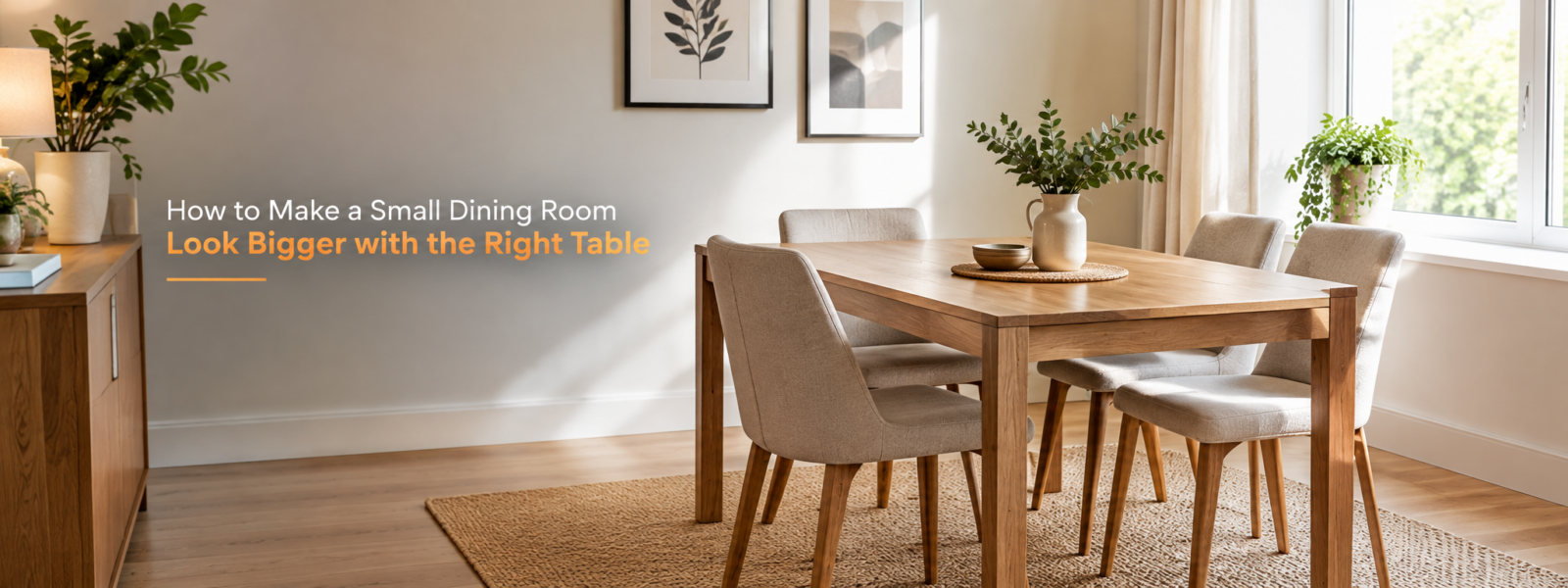
Making a compact room feel airy and inviting starts with the centrepiece of the space. When you shop dining tables for a smaller british home, choosing the right silhouette transforms cramped corners into welcoming social hubs. A well proportioned table creates visual breathing room while still offering pleny of surface area for daily meals.
The fastest way to make a small dining room look bigger is to select a round or oval table with a light reflecting surface and slender legs. These smart design features allow natural light to travel freely across the floor and eliminate sharp visual barriers that make a room feel enclosed.
Homeowners across buckinghamshire and the wider uk often visit our showroom or shop dining tables online to find pieces that balance practicality with refined style. Whether you live in a cosy Victorian terrace or a modern open plan apartment, thoughtful furniture choices can instantly double your sense of space.
Table of Contents
- Choose the Right Dining Table Shape for Small Spaces
- Measure Your Dining Area Before Selecting a Table
- Opt for Space Saving and Extendable Table Designs
- Use Glass and Light Coloured Surfaces to Create Openness
- Select Slim Legs and Minimalist Table Structures
- Position the Table to Improve Room Flow
- Pair Your Table with Space Efficient Dining Chairs
- Use Lighting and Mirrors to Enhance Visual Space
- Keep the Dining Area Clutter Free and Balanced
- Common Mistakes to Avoid When Choosing a Small Dining Table
- Small Dining Table Buyer Checklist
- Frequently Asked Questions
Choose the Right Dining Table Shape for Small Spaces
The geometry of your dining table dictates how easily people move around the room and how much floor remains visible. Traditional rectangular tables often dominate compact rooms because their sharp ninety degree corners jut into walkways and interrupt the natural flow of traffic.
For longer, narrower dining spaces or galley style kitchen diners, an oval table delivers the generous seating capacity of a rectangle without the visual bulk. The curved ends prevent bruising hips in tight passages while creating a graceful, elongated sightline down the centre of the room.
Square tables can also work remarkably well in small nooks, particularly when pushed against a wall for everyday use. You can pull a square table into the centre of the room for dinner parties, giving you maximum versatility in a modest footprint.
| Table Shape | Best Room Layout | Typical Seating | Visual Space Impact |
| Round Table | Square rooms and breakfast nooks | 2 to 4 people | Softens corners and widens walkways |
| Oval Table | Narrow rooms and long kitchen diners | 4 to 6 people | Elongates sightlines without sharp edges |
| Square Table | Compact alcoves and open corners | 2 to 4 people | Neat symmetry that tucks against walls |
| Narrow Rectangular | Long galley spaces and wall seating | 4 to 6 people | Maximises surface length in slim zones |
Measure Your Dining Area Before Selecting a Table
Even the most stylish dining table will make a room feel claustrophobic if its proportions overwhelm the surrounding floor area. Accurate measuring before you buy ensures your new furniture enhances the room rather than restricting your daily movement.
Interior specialists recommend maintaining a minimum clearance of 90 centimetres from every edge of the dining table to the nearest wall, radiator, or sideboard. This allowance ensures diners can pull their chairs back comfortably and walk behind seated guests without squeezing sideways.
Before committing to a specific size, mark out the exact dimensions of your preferred table on the floor using masking tape or sheets of newspaper. Walk around the taped outline and mimic pulling out a chair to experience how the layout feels in real life.
Key Takeaways Summary
- Round and oval shapes improve flow: Curved edges remove bulky corners and create wider walkways in narrow rooms.
- Clearance matters most: Always leave at least 90 centimetres between the table edge and nearby walls so chairs pull out effortlessly.
- Extendable designs offer flexibility: Compact extending dining tables save daily floor space while expanding when guests arrive.
- Light surfaces reflect brightness: Tempered glass, pale oak, and white ceramic tabletops bounce natural light across the room.
- Slender bases reduce visual weight: Central pedestal bases and tapered legs expose more flooring, making the room feel wider.
- Low profile seating saves room: Armless chairs and tuck under dining benches keep walkways clear between meals.
Opt for Space Saving and Extendable Table Designs
Modern British homes demand furniture that adapts to changing routines, from quiet weekday breakfasts to lively Sunday roasts with extended family. Choosing an extending dining table allows you to keep your room spacious on ordinary days while remaining ready to host at a moment’s notice.
Butterfly extension mechanisms are especially popular for compact homes because the extra leaf folds neatly inside the table frame when not in use. You do not need to find spare cupboard space to store bulky wooden panels, and one person can open the table in seconds.
End extension tables offer another clever engineering solution for smaller spaces. Sliding panels pull out smoothly from either end of the tabletop, keeping the central leg structure stable while adding enough length for two or four extra dining chairs.
| Extension Mechanism | Ease of Operation | Extra Storage Needed | Best Material Pairing |
| Butterfly Leaf | Smooth single person glide | None, stores inside frame | Solid oak and painted wood |
| End Extension | Pull out runners at each end | None, integrated panels | Ceramic and tempered glass |
| Drop Leaf Design | Simple hinged side flaps | None, folds flat downward | Classic oak and ash timber |
| Centre Insert Leaf | Manual tabletop separation | Requires cupboard storage | Traditional hardwood tables |
Use Glass and Light Coloured Surfaces to Create Openness
Colour and material reflectivity play a decisive role in how large or small a room appears to the human eye. Dark, heavy timber slabs absorb natural daylight and act like a visual block in the middle of the floor, effectively cutting the room in half.
A tempered glass dining table is one of the smartest investments for a compact dining area because it is virtually transparent. Because you can see straight through the tabletop to the flooring and rug beneath, the eye perceives uninterrupted square footage across the entire room.
If you prefer the warmth and durability of solid surfaces, look for light coloured finishes that brighten your interior palette. Pale European oak, whitewashed timber, soft dove grey ceramic, and crisp white marble effect tops bounce window light into shadowy corners.
Satin and gloss finishes also help amplify ambient light from overhead lamps and nearby windows. Pairing a light ceramic tabletop with pale neutral walls blurs the boundary between furniture and architecture, creating a serene, expansive atmosphere.
Select Slim Legs and Minimalist Table Structures
The underside of a dining table carries just as much visual weight as the tabletop itself. Thick, chunky block legs positioned at all four corners create a cage like effect that clutters the lower half of the room and limits where chairs can be placed.
Central pedestal tables eliminate corner legs entirely, opening up the floor space beneath the table and creating clean, unobstructed sightlines. A sculpted central column or sleek crossed metal base looks architectural while giving diners far more freedom to stretch their legs.
If you love the classic appeal of a four legged table, opt for designs featuring slender, tapered Scandinavian style legs or angled hairpin frames. Narrow profiles allow light to pass underneath the table, preserving an airy, elevated look.
Position the Table to Improve Room Flow
Where you place your dining table has an immediate impact on how spacious and functional the room feels. Rather than automatically pushing a table into the dead centre of the floor, consider the natural pathways people take when entering and exiting the space.
Positioning your dining table parallel to the longest wall creates a sense of visual harmony and prevents the furniture from cutting across the room. In open plan kitchen diners, aligning the table with the kitchen island establishes a cohesive, structured layout.
Placing your table near a main window allows natural light to flood across the surface, highlighting the grain of the wood or the sheen of a glass top. This placement also draws the gaze outward toward the garden or street, borrowing outdoor depth to expand the interior.
Pair Your Table with Space Efficient Dining Chairs
Choosing the right table is only half the equation, as bulky dining chairs can quickly crowd a compact dining zone. Oversized roll back chairs with wide armrests consume excessive floor area and prevent seating from tucking neatly beneath the table.
Armless dining chairs with slim silhouettes are ideal for smaller rooms because they sit close together without clashing. Look for chairs with low to medium backrests that sit just above or flush with the tabletop height so they do not block your view across the room.
Cantilever chairs and slender metal or solid wood frames keep the lower area of the room open and uncluttered. Upholstered seats in light neutrals, soft greys, or subtle textured fabrics add comfort without introducing heavy visual bulk.
Use Lighting and Mirrors to Enhance Visual Space
Strategic lighting and reflective decor work alongside your dining table to expand the perceived boundaries of a small room. A single dim ceiling bulb leaves corners in shadow, making walls feel closer than they actually are.
Hanging a stylish pendant light or a cluster of slim glass shades directly above the centre of the dining table draws the eye upward. Emphasising vertical height distracts from a modest floor plan and creates an intimate, restaurant quality focal point.
Positioning a large framed mirror on the wall adjacent to your dining table is an age old designer trick that never fails. The mirror reflects both the dining table and incoming daylight from opposite windows, creating the illusion of a second room beyond the wall.
Keep the Dining Area Clutter Free and Balanced
Visual clutter shrinks a room faster than any piece of furniture, regardless of how well proportioned your table might be. When tabletops become dumping grounds for keys, post, laptops, and decorative trinkets, the entire dining room feels cramped and chaotic.
Adopt a minimalist approach to table styling by choosing a single, low profile centrepiece such as a small ceramic vase with fresh greenery or a slim wooden bowl. Keeping the majority of the tabletop bare allows light to reflect across the surface and maintains an open feel.
Invest in smart, narrow storage furniture to keep tableware, placemats, and glassware neatly tucked away. A slimline sideboard or compact display cabinet from Evans of High Wycombe provides generous storage without protruding deeply into your walkway.
Common Mistakes to Avoid When Choosing a Small Dining Table
Even with the best intentions, it is easy to make missteps when furnishing a compact dining room. Avoiding these frequent pitfalls will save you time, money, and daily frustration.
- Buying a table that is too wide: Tables wider than 90 centimetres often overwhelm narrow UK dining rooms and leave cramped walkways on either side.
- Forgetting chair width measurements: Purchasing chairs that are too wide prevents them from sliding between the table legs, forcing them to stick out into the room.
- Choosing dark, matte furniture in dimly lit rooms: Heavy dark finishes absorb precious light and make compact spaces feel closed in and sombre.
- Overcrowding the table with excess chairs: Squeezing six chairs around a compact four seater table looks cluttered and leaves diners knocking elbows.
- Ignoring the swing of nearby doors: Failing to check how kitchen, hallway, or patio doors open can result in doors colliding with chair backs.
Small Dining Table Buyer Checklist
Use this practical checklist before making your final decision to ensure your chosen dining table enhances your room’s proportions and daily comfort.
☐ Measure the total room dimensions and subtract 180 centimetres from both length and width to find your maximum table footprint.
☐ Confirm that at least 90 centimetres of clear walking space remains around all sides of the table.
☐ Choose a round, oval, or slim rectangular silhouette suited to your room’s specific layout.
☐ Check whether an extending mechanism is needed for hosting family gatherings or festive dinners.
☐ Prioritise light reflecting materials such as clear tempered glass, pale oak, or light ceramic finishes.
☐ Inspect the leg design to ensure pedestal bases or slender tapered legs maximise floor visibility and legroom.
☐ Verify that your chosen dining chairs are armless and narrow enough to tuck completely beneath the tabletop.
☐ Measure all doorways, hallways, and staircases to guarantee smooth delivery access into your home.
Frequently Asked Questions
What is the best dining table shape for a very small dining room?
A round dining table with a central pedestal base is widely considered the best shape for a very small room. Without sharp corners jutting into walkways, a circular tabletop improves traffic flow, exposes more floor area around the edges, and allows you to tuck extra seating around the curve comfortably.
How much space do I need around a dining table for chairs to pull out comfortably?
You should leave at least 90 centimetres of clear space between the edge of your dining table and any surrounding walls or furniture. This distance gives diners plenty of room to pull their chairs out, sit down comfortably, and allows other people to walk behind them without squeezing past.
Are glass or wooden dining tables better for making a small room look larger?
Tempered glass dining tables are unmatched for creating visual openness because their transparent tops let you see the floor underneath, removing visual barriers. However, light coloured wooden tables crafted from pale oak or ash with slender tapered legs also make a small room feel bright, warm, and spacious.
Final Thoughts
Transforming a small dining room into an airy, welcoming space comes down to choosing furniture with smart proportions, light reflecting finishes, and clean lines. By selecting the right table shape, pairing it with space efficient seating, and maintaining clear walkways, even the cosiest dining nook can feel remarkably generous.
At Evans of High Wycombe, we bring decades of British furniture heritage and design expertise to help you make the most of every square centimetre in your home. Explore our curated collection of extending oak tables, sleek glass designs, and tailored dining chairs to find the ideal centrepiece for your dining space.