Style
Small Entryway? How to Fit a Console Table Without It Looking Cramped
Jul
You open the front door, drop your keys, kick off your shoes, and immediately regret not having somewhere to put any of it down. That’s the moment most people start searching for a solution and almost always, the first idea that comes up is a console table. Then reality sets in: the hallway is barely wide enough to pass through, let alone fit a piece of furniture.
The good news is that this is one of the most common entryway problems out there, and it’s rarely actually about space. It’s about proportion. A narrow hallway that feels too tight for furniture usually just needs the right furniture, not more square footage. Most small entryways can comfortably hold a slim piece, the trick is knowing which dimensions, materials, and styling choices make it disappear into the room instead of blocking it.
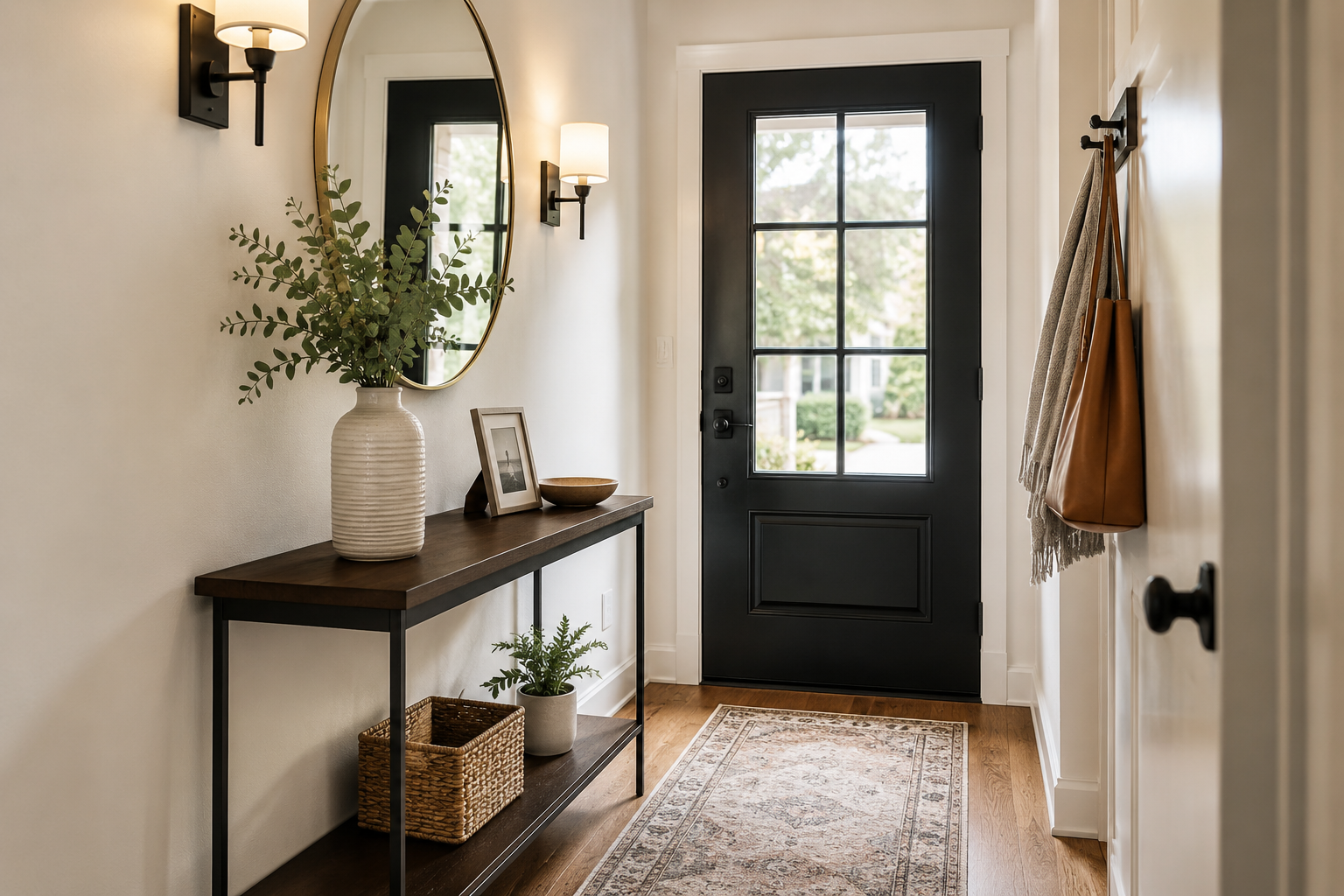
That’s exactly where a Console Tables earns its keep. Unlike bulkier furniture, a well-proportioned console is built to hug a wall rather than sit in open floor space, which means it can add function to a tight hallway without eating into the path you actually walk through every day. The key is choosing one sized for a hallway, not one sized for a great room.
Start With the Measurement, Not the Style
Before you fall in love with a finish or a shape, measure your space. This one step prevents almost every “it looks cramped” complaint.
- Depth: For a narrow hallway, look for a depth of 12–16 inches (30–40cm). Anything deeper starts to compete with foot traffic.
- Walking clearance: Leave at least 30–36 inches of clear path in front of the table. If people have to turn sideways to get by, the table is too deep for the space, no matter how nice it looks.
- Length: As a rule of thumb, the table shouldn’t run longer than about two-thirds of the wall it sits against, a full-wall table reads as a barrier rather than an accent.
Choose a Slim, Leggy Silhouette Over a Bulky Base
Two console tables can have the exact same footprint and feel completely different in a small space, depending on their base. A solid cabinet-style front reads as a wall of furniture. An open-leg design lets you see the floor underneath, which visually stretches the space and makes the whole piece feel lighter, even though it’s taking up the same physical inches.
Let Light Materials Do the Work
Dark, heavy wood absorbs light and visually shrinks a hallway, especially one that doesn’t get much natural light to begin with. Lighter finishes pale oak, glass tops, rattan or cane detailing, or a mirrored surface bounce light around the space instead of soaking it up. If your entryway is dim, this one swap does more for the “cramped” feeling than almost any other decision you’ll make.
Go Narrow and Tall, Not Wide and Low
It helps to think about what a console table is not: it’s not a coffee table. A coffee table is built low and wide, meant to sit in open floor space where you can put your feet up around a sofa. An entryway piece needs the opposite proportions, narrower and a touch taller, so it can sit flush against a wall without ever intruding on the walking path.
If a table you’re considering feels more like a coffee table with legs, it’s the wrong shape for a hallway, no matter how good it looks in a showroom.
Style It With Restraint
The fastest way to make a small console table feel cramped isn’t the table itself, it’s what goes on top of it. In a tight entryway, less is genuinely more:
- Stick to two or three items instead of a full tablescape
- Favor vertical pieces (a tall vase, a slim lamp) over wide, sprawling ones
- Leave visible empty space on the surface it reads as calm, not unfinished
Add a Mirror Above It
This is the single most effective trick for a small entryway. A mirror hung above the table bounces light back into the room and visually doubles the sense of depth, making the whole area feel larger the moment you walk in. It’s also simply practical nobody’s ever complained about a last-glance mirror by the front door.
Consider Built-In Storage
A table with a single drawer or a lower shelf lets you tuck away mail, keys, or masks instead of leaving them on the surface. In a small space, hidden storage does more to prevent visual clutter than any amount of clever styling can.
Common Mistakes to Avoid
- Buying a table that’s deep enough to look good in photos but too deep to walk past comfortably
- Choosing a dark, heavy finish in a hallway with little natural light
- Overcrowding the top with too many decorative objects
- Ignoring wall length and picking a table that runs edge-to-edge
The Takeaway
A small entryway isn’t a reason to skip a console table it’s a reason to be more deliberate about which one you choose. Get the depth right, pick a lighter, leggier design, and style it with restraint, and a narrow hallway can feel just as finished as a grand foyer.
If you’d like to see the kind of slim, well-proportioned pieces that work in tighter spaces, it’s worth a browse through Evans of High Wycombe a local furniture maker with decades of experience helping people fit good furniture into real homes, not just showroom-sized ones.