Style
How to Choose the Perfect Centerpiece for Your Living Room
Jul
Living rooms are where daily life happens. Whether you are hosting friends for a weekend hangout or unwinding after a long work day, how your furniture is arranged dictates how comfortable the room feels. Couch placement and accent seating usually get the most attention during design planning, but the piece sitting right in the middle ties the entire room together.
A well placed center piece creates a natural anchor for your seating arrangement. It gives everyone a convenient place to set down a hot mug, stash a book, or rest their feet during movie nights. When proportions are off, the room quickly feels disjointed, cluttered, or awkward to walk through.
Choosing the right coffee tables comes down to balancing practical dimensions with your personal design style. Finding a piece that matches your couch height and floor space instantly brings structure, comfort, and function to your main gathering area.
Getting the Dimensions Right
Determining the correct size for your central table starts with measuring your current sofa and floor space. A piece that is too large overpowers the seating area, restricting movement and making the room feel cramped. On the other hand, a table that is too small leaves seats feeling isolated, forcing people to lean uncomfortably far forward to reach the surface.
As a practical rule, the length of your centerpiece should measure about two thirds the total width of your sofa. Table height is just as important. The top surface ought to sit level with your sofa seat cushions, or sit roughly one to two inches lower. Keeping this height alignment preserves clear sightlines across the room and makes reaching for drinks completely natural.
Finding the Right Proportions for Your Sofa
When planning layout distances, aim for 14 to 18 inches of breathing room between the couch edge and the table. This gap leaves plenty of legroom while keeping the surface within easy arm’s reach. For main walkways that pass through the room, leave at least 30 to 36 inches of open floor space to ensure traffic moves smoothly without anyone bumping into corners.
Material Matters like Timber, Stone, and Glass Choices
The material you choose influences both the visual warmth of your lounge and how much care the surface requires over time. Solid hardwoods like oak, walnut, and ash remain top choices because of their strength, rich grain patterns, and natural durability. Wooden surfaces age gracefully, handling daily family use well while offering the ability to be sanded and refinished decades down the road.
Natural stone options, such as marble or travertine, bring cool textures and modern elegance to living spaces. While stone requires periodic sealing to protect against liquid stains, its unique mineral veining creates a striking focal point. For smaller or darker living rooms, tempered glass tops offer a light, reflective surface that visually opens up the floor by allowing light to pass straight through.
Matching Table Shapes to Your Floor Plan
The shape of your central furniture controls how energy and movement flow around your seating layout. Rectangular and square designs are traditional standards for standard couches and wide sectional setups. They offer ample surface area for serving trays, decorative items, and everyday essentials.
Compact or L-shaped rooms often benefit from rounded edges. Circular and oval shapes eliminate sharp corners, making them much safer for homes with young children while softening rigid architectural lines in modern floor plans.
Navigating Traffic Patterns with Round and Oval Shapes
Round surfaces allow people to walk around tight corners effortlessly, which helps small living spaces feel larger. Curved shapes also break up straight lines in rooms dominated by boxy couches and square windows, creating a balanced and welcoming atmosphere.
Smart Storage Options to Keep Clutter Out of Sight
A clean living room relies on smart storage to keep everyday items organized. Tables built with deep, smooth gliding drawers let you hide television remotes, game controllers, charging cables, and coasters out of sight. Hidden storage maintains a tidy tabletop, which is especially helpful in open concept spaces where the living area is always on display.
Lower open shelves provide a great alternative for items you want to keep handy. An open bottom shelf is ideal for stacking oversized art books, storing board games, or placing woven baskets for extra blankets. Open shelving adds visual depth to the furniture without making the room feel heavy or overcrowded.
Everyday Styling Tips That Keep Your Space Functional
Styling your central table should enhance its look without taking away from its daily purpose. Overpacking the tabletop creates visual noise and leaves no functional space for drinks or snacks. A straightforward styling method relies on the rule of threes: grouping decorative objects in odd numbers with varying heights and textures.
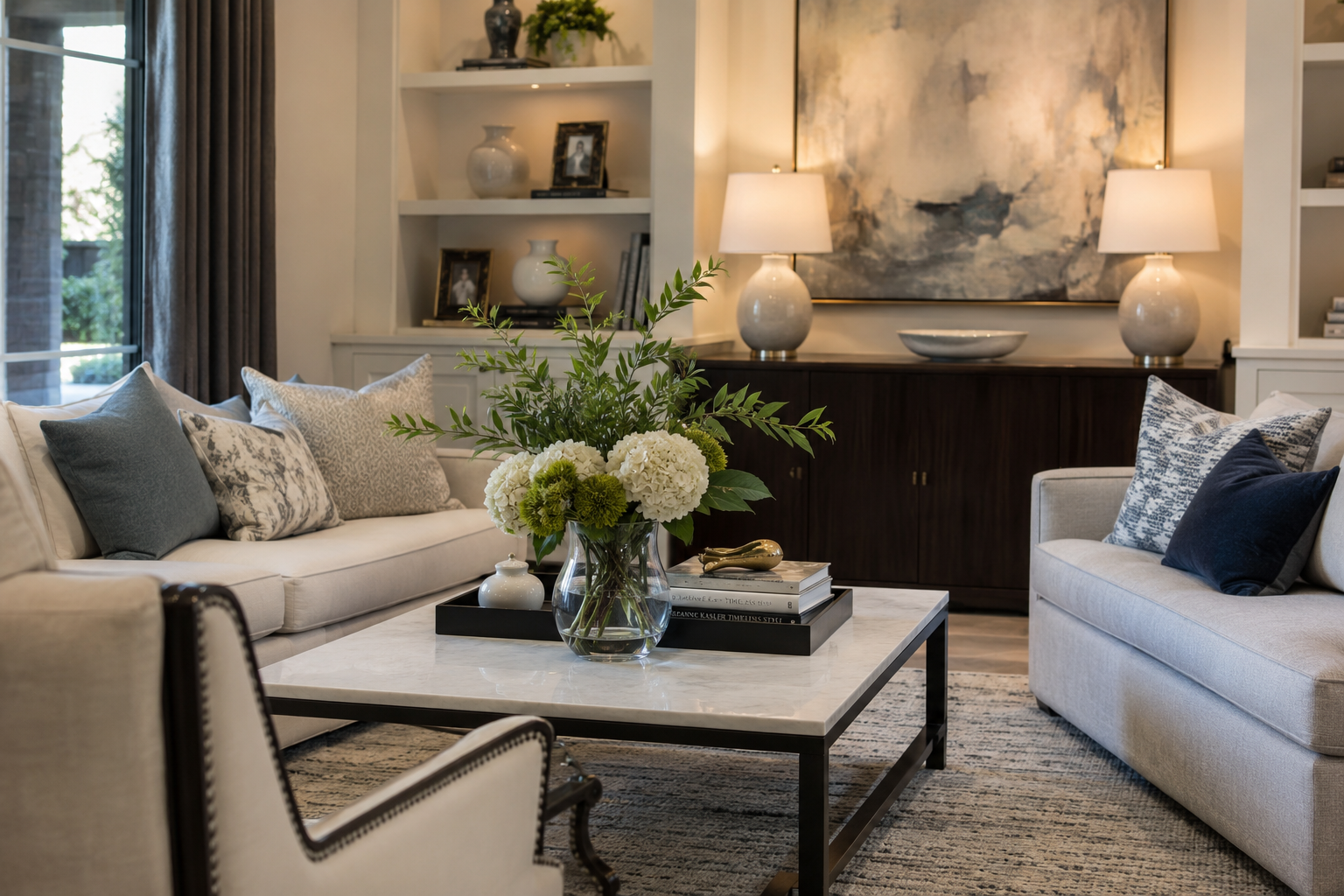
Using a shallow wooden or stone tray helps bundle smaller items together, such as a small candle, a decorative bowl, and fresh flowers. When you need extra space for board games or casual dining, you can simply pick up the tray and clear the entire surface in one quick motion.
Simple Maintenance Rules to Protect Your Surface
Keeping fine furniture looking great requires simple, consistent care tailored to its specific material. Solid wood surfaces benefit from light dusting with a microfiber cloth and an occasional treatment with natural beeswax or specialized furniture oil to keep the timber hydrated and protected against humidity changes.
Prevention is always the best way to avoid damage. Always place felt backed coasters under hot coffee cups and cold beverage glasses to prevent ring marks. If spills occur on porous wood or unsealed stone, wipe them up right away with a clean, soft cloth instead of using harsh chemical cleaners that can strip away protective finishes.
Value of Traditional Handcrafted Furniture
True quality in living room furniture comes from dedicated craftsmanship and time tested woodworking traditions. In High Wycombe, furniture making has been refined as an art form since 1958, setting a high standard for durable, beautiful timber construction. Handcrafted pieces built in specialized local workshops possess a level of structural integrity and character that mass produced alternatives simply cannot match.
Choosing custom workshop production gives you the freedom to tailor furniture dimensions to your exact floor plan. Instead of settling for standard factory dimensions, bespoke crafting allows you to select the exact length, width, height, timber species, and stain finish that fits your space. Built with solid frames and hand selected woods, custom pieces provide long lasting stability, ensuring your living room centerpiece remains a reliable part of your home for decades.
Frequently Asked Questions
How far should my table be from the television console?
Keep at least 30 to 36 inches of open space between the edge of your table and a television console or wall unit. This ensures a comfortable walking path through the room without feeling squeezed.
Is solid wood or metal better for a busy family home?
Solid wood is usually the better choice for busy homes because it absorbs daily impacts well and can be sanded or refinished if it gets scratched. Metal is durable too, but lower quality metal frames can dent, and cold surfaces are less forgiving in cozy spaces.
Can I pair a round table with a rectangular sectional sofa?
Yes, a round table works very well with L-shaped or rectangular sectionals. The rounded shape fits neatly into the interior angle of the sectional, providing easy access from every seat while softening the overall look.
What is the easiest way to prevent water rings on timber surfaces?
The most effective solution is using absorbent or felt backed coasters under all drinks. If a light water ring forms, gently rubbing the area with a soft cloth dipped in a mixture of equal parts olive oil and vinegar can often lift the mark without harming the wood finish.
Final Considerations
Bringing together correct scale, durable materials, and smart storage creates a living room that fits your daily routine. Paying attention to details like couch height and clearance zones prevents daily inconvenience and makes your living area far more comfortable for family and guests.
Incorporating well crafted coffee tables adds genuine warmth and character to your home while providing a reliable surface for morning drinks, family games, and evening relaxation. Investing in durable materials ensures your central furniture stays looking great through years of constant use.
Every home benefits from furniture designed with intention and built to last. By pairing smart room planning with traditional timber craftsmanship, you create an inviting living space that effortlessly adapts to whatever your day brings.