Style
What Makes a Dining Table Easy to Live With Every Day
Oct
A dining table is one of those pieces of furniture that can quietly become part of almost every part of daily life. It is where meals are served, conversations happen, homework gets done, bills are sorted, laptops are opened, and guests are sometimes gathered around at the same time. Because of this, choosing a table based only on how it looks can lead to problems later.
A table can appear perfect in a showroom or photograph and still be frustrating in everyday use. It may leave too little room for chairs, make the room difficult to walk through, collect marks easily, or simply feel awkward when several people are sitting around it. The best dining table is usually the one that fits naturally into the way the room and household already work.
The Table Should Fit the Room Without Taking It Over
A dining table does not need to fill the available floor space to feel substantial. In fact, one of the easiest ways to make a dining room uncomfortable is choosing a table that is slightly too large for the area.
Think about what happens when the chairs are pulled out. A table may fit neatly when the chairs are pushed underneath, but everyday use requires much more space. People need room to sit down, stand up, move around the table, and reach nearby doors or storage.
A table that leaves sensible walking space around it usually feels far more comfortable than one that uses every available inch. This matters even more in rooms where the dining area shares space with a kitchen or living area.
Chair Clearance Can Make or Break the Setup
The table itself may not be the problem. Sometimes the real issue is the amount of room available around it. When people sit down, their chairs naturally move backward. If there is a wall, cabinet, radiator, or another piece of furniture directly behind the chair, the person may have to squeeze in or move the chair every time they sit down.
That quickly becomes annoying because it affects something that happens every day. Before choosing a table, think about the full footprint of the dining setup rather than measuring the tabletop alone.
A dining arrangement works best when people can move their chairs without constantly bumping into something behind them.
Table Height Affects Everyday Comfort
Table height is easy to ignore because most dining tables appear roughly similar at first glance. Small differences, however, can affect how comfortable the table feels.
Your legs should have enough room underneath the tabletop, and your elbows should sit naturally when eating or working. A table that is too high can make chairs feel lower than they should, while a lower table can create a cramped feeling around the knees.
Chair height and table height should always be considered together. A comfortable dining setup depends on both pieces working as a pair. This becomes especially important when mixing a new table with chairs you already own. A combination that looks fine may still feel uncomfortable after sitting for a long meal.
The Space Underneath Matters More Than You Might Think
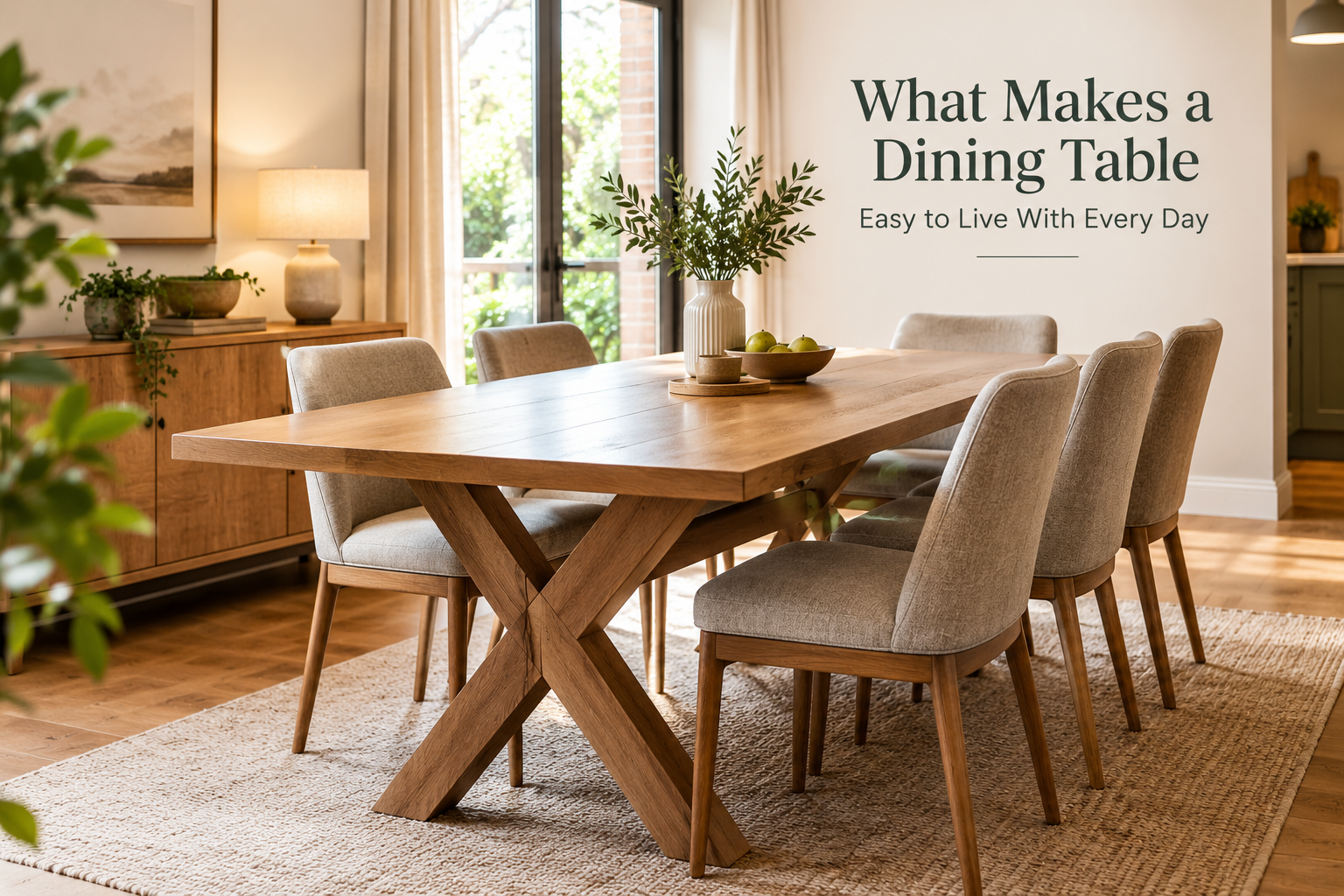
The area beneath a dining table often gets overlooked because it is not part of the visible design. Yet this is where your legs, chairs, and feet need to fit comfortably. Some tables have a central base, while others use four separate legs. Both designs can work well, but the placement of the structure underneath can affect where people can sit.
A traditional four leg table may make it harder for someone to sit comfortably at the end if the leg position is restrictive. A central base can give more freedom for some seating arrangements, but it can also take up more space in the middle. The right choice depends on how many people normally sit at the table and how flexible you want the seating to be.
Everyday Meals Need Different Space From Occasional Seating
The number of people a table can technically seat is not always the same as the number of people who can sit comfortably around it. If six chairs are squeezed around a table designed mainly for four, everyone may have enough space to sit but very little room for plates, serving dishes, drinks, and elbows.
For everyday use, each person should have enough personal space to eat without constantly touching the person beside them. You should also think about whether meals are usually served individually or placed in the middle of the table. A household that regularly shares large dishes may need more tabletop space than one where meals are plated before everyone sits down.
A Table Should Make Hosting Easier Too
Daily practicality does not mean planning only for ordinary family meals. A dining table often becomes more useful when friends or relatives visit. The challenge is finding a balance between normal use and occasional gatherings. A table that is comfortably sized for the household may need some extra flexibility for guests.
Extendable designs can help in these situations because they allow the table to remain compact most of the time and expand when more people need to sit around it. This can be particularly useful in homes where dining space is limited. There is little value in keeping a large table permanently in the room just for the few occasions each year when extra seating is needed.
Dining Tables Need to Work With Real Life
A table that looks beautiful but demands constant care may not be the best everyday choice. Families often eat quickly, children may spill drinks, and people regularly place hot dishes, plates, books, bags, and other objects on the surface. A dining table needs to handle these ordinary moments without becoming a source of stress.
This does not mean appearance is unimportant. It means the finish should suit the way the table will actually be used. A household that wants a relaxed dining area may value a surface that is easy to wipe and maintain. Someone who mainly uses the table for formal meals may be more comfortable choosing a delicate finish that requires more care.
The Surface Should Suit Your Routine
Different tabletop materials behave differently in everyday use. Some surfaces are more forgiving of marks and spills, while others may show scratches, fingerprints, or water rings more easily.
Think about what happens at your table on a normal weekday. Do people eat there three times a day? Is it also used as a workspace? Are hot pans regularly brought directly from the kitchen? Do children use it for crafts or homework?
The answers matter because they tell you what kind of surface will remain practical over time. A dining table should not force you to change your entire routine just to keep it looking presentable.
Leg Placement Can Influence Where People Sit
The position of the legs may become noticeable only after the table is in regular use. When the legs sit too close to the corners, they can interfere with chairs or restrict where someone can place their legs. This can make end seating uncomfortable and may reduce the number of people who can realistically use the table.
A well designed table should allow people to sit naturally rather than making them adjust their position around the frame. This is particularly worth checking when you are choosing a rectangular table for a narrow room. The tabletop may provide enough width, but the base underneath could still create problems.
Corners Matter in Smaller Dining Rooms
Sharp corners can take up more visual and physical space than expected, especially in a smaller room where people move around the table frequently. A rectangular table can work very well when there is enough space around the ends. However, if one side sits close to a doorway or main walkway, the corners may become something people constantly have to move around.
In certain rooms, a round or oval tabletop can make movement feel easier because there are no sharp corners projecting into the walking route.
This is not about one shape being universally better. It is about choosing a shape that matches how people move through the room.
The Shape Should Match the Way You Use the Table
A round table can encourage conversation because everyone faces toward the centre and no seat feels dramatically separated from the others. A rectangular table can work especially well for larger groups and longer rooms. It can also provide more usable wall to wall alignment when furniture is arranged along the room’s shape. Square tables can suit compact dining areas where the room itself has balanced proportions.
The useful question is not which shape looks best in general. Ask which shape makes the most sense for your room, your household, and the way people actually sit together.
Storage Around the Table Should Still Be Accessible
Some dining rooms contain sideboards, cabinets, display units, or kitchen storage nearby. These pieces need enough space to open without hitting the dining table or chairs. It is common to measure the room and table but forget to check how drawers and cabinet doors operate.
Imagine someone sitting at the table while another person opens the nearby cupboard. Will they have to stand up? Does the cabinet door come into the chair? Is there enough space for someone to walk behind the seated person? These details may seem minor, but they influence how smoothly the room works every day.
A Good Table Should Not Block Important Routes
A dining table is rarely placed in complete isolation. People need to move between rooms, reach the kitchen, access windows, and get around the dining area. This makes the position of the table just as important as its dimensions.
Before deciding where it should sit, think about the routes people take most often. If someone has to pass behind a chair every time they walk to the kitchen, the dining arrangement may become irritating even when the table itself is comfortable. The best placement usually leaves clear paths where movement naturally happens.
Shared Spaces Need More Careful Planning
In an open plan home, the dining table may sit between the kitchen and living room. It then has to work as part of a larger arrangement rather than as a separate dining area. A table that is too large may make the whole room feel crowded. One that is too small may look disconnected from the rest of the space.
The table can help create a clear dining zone without needing a physical wall. Its shape, position, and size can subtly separate eating space from the sitting or cooking area. This makes proportion particularly important. The table should feel large enough to serve its purpose while still allowing the surrounding spaces to breathe.
The Right Size Is Based on More Than Number of Seats
It is tempting to choose a table by looking at labels such as four seater, six seater, or eight seater. Those descriptions are useful starting points, but they do not tell you everything. Two tables designed for the same number of people can have very different widths, depths, and leg arrangements.
The way people eat also matters. A family that likes to place several serving bowls in the centre may need more tabletop space than a household that keeps the middle mostly clear.
Think about the size of the plates, serving dishes, glasses, and other items normally used during meals. Everyday use will tell you much more than a simple seating number.
A Practical Table Can Support More Than Meals
Many homes no longer use their dining table only for dining. It can become a place for schoolwork, remote work, hobbies, wrapping gifts, sorting paperwork, or preparing food. This means practicality can involve more than seating comfort.
A table used for several activities needs enough surface space and a finish that can cope with regular handling. Height becomes even more important in this situation because a table that feels comfortable for eating may not suit several hours of laptop work.
Thinking about these extra uses can help you choose a piece that remains useful throughout the day rather than sitting unused between meals.
Menus Can Influence Table Space Too
The way meals are served can change how much space you really need. For simple breakfasts or quick weekday meals, a smaller table may be perfectly practical. But larger family dinners can involve serving bowls, sauces, drinks, bread, plates, and other items that quickly occupy the centre.
If you regularly eat together, the difference becomes noticeable. You do not necessarily need a huge tabletop. You simply need enough usable space for the way meals are normally served in your home. This is one reason measuring the tabletop alone is not enough. Think about how the surface is occupied when everyone is actually eating.
A Table Should Feel Stable Under Normal Use
Nobody wants a dining table that wobbles whenever someone leans on it. Stability is particularly important because dining tables are used frequently and often receive more pressure than expected. People place heavy dishes on them, lean against the edge, move laptops around, and sometimes use them as temporary work surfaces.
Check that the frame feels solid and that the table remains steady when gentle pressure is applied. A stable table does not need to feel excessively heavy. Good construction and sensible proportions can provide firmness without making the piece difficult to move when the room needs rearranging.
Maintenance Should Fit Your Willingness to Care for It
Every material has its own maintenance needs. The important thing is to choose a level of care that fits your normal habits. Some people enjoy regularly maintaining natural materials and do not mind taking extra care with spills or heat. Others want a table that can be wiped clean and used without much thought.
Neither approach is wrong. Problems usually happen when someone chooses a finish based on appearance and only later realises that it requires more attention than they are prepared to give. A table is easier to live with when its upkeep matches your lifestyle.
Everyday Design Often Beats Decorative Detail
Dining tables can include turned legs, carved details, contrasting finishes, elaborate bases, and other decorative features. These can look attractive, but they should not interfere with practical use.
A heavily detailed base may make cleaning more difficult. Decorative edges can take up useful space. A large central feature may limit how chairs can be positioned.
Simple design does not mean boring design. Often, a well proportioned shape with good materials and carefully considered details looks better for longer because it does not depend on short lived trends. For everyday furniture, usefulness should remain part of the design from the beginning.
Think About Cleaning the Whole Table, Not Just the Top
Spills do not always stay on the tabletop. Crumbs collect around joints, underneath edges, and near the base. A complicated design may create more places where dust and food can gather.
Consider how easy the table will be to clean during a normal week. Can you quickly reach underneath it? Are there awkward corners around the legs? Does the surface allow you to wipe away a spill without needing special treatment every time? The easier it is to keep clean, the more relaxed the table usually feels in everyday use.
The Table Should Work With Your Chairs
A dining table can be excellent on its own and still feel wrong when paired with certain chairs.
Check the relationship between seat height, armrests, back height, and the underside of the tabletop. Chairs with arms may not slide fully underneath, which can increase the space required around the table.
The chair width matters too. If each chair is unusually wide, a table that technically seats six may feel crowded once everyone is seated.
This is why the dining setup should always be considered as a complete arrangement rather than choosing the table in isolation.
Delivery and Access Deserve Attention Before Buying
Large furniture creates practical challenges before it even reaches the dining room. Measure entrance doors, hallways, staircases, and any tight turns that the table will need to pass through. This is particularly important for large fixed tables that cannot be reduced in size.
It can be frustrating to discover that a table fits beautifully in the room but cannot pass through the front door. Planning access early can prevent a very avoidable problem.
Dining Tables Should Feel Natural in the Room
The best furniture does not constantly draw attention to itself. It simply works. A well chosen dining table should allow people to sit comfortably, move around easily, place meals where they need to go, and use the room without feeling restricted.
The visual side matters too, but good proportions often do more for a room than decorative features. A table that is correctly scaled to the surrounding furniture can make the entire dining area feel more settled.
This is especially useful when the room contains a mixture of furniture styles. A balanced table can connect those pieces without needing to match every item exactly.
Consider How the Table Will Age With Your Home
A dining table is often kept for many years, which means today’s needs may not be the only needs that matter.
Your household may change. Children may grow, working habits may shift, or you may start entertaining more frequently.
A flexible table can adapt better to these changes. An extendable design can provide extra seating when needed, while a simple shape can remain useful even if the room is redecorated.
Durability matters here too. A table intended for long term use should be made with materials and construction that can handle regular wear rather than looking impressive only when new.
The Most Useful Table Is the One You Stop Thinking About
When a dining table is right for your home, you rarely notice it causing problems.
You sit down without checking whether your knees have enough space. You pull out a chair without hitting the wall. You place dishes on the surface without worrying about every small mark. People can walk through the room without squeezing around furniture.
That is a better measure of practicality than appearance alone. The table should quietly support daily life instead of creating a list of little inconveniences that you have to work around.
Look at Your Routine Before You Choose the Table
Before buying, spend a normal day paying attention to how your dining area is actually used. Notice where people sit most often, where chairs are pulled out, how much space serving dishes need, and which routes through the room are used repeatedly.
Think about whether the table is likely to become a work area, whether guests visit regularly, and whether there is enough room for additional seating when needed.
These observations can be surprisingly useful because they turn the buying decision into a practical exercise rather than a purely visual one.
The right table is not simply the one that looks attractive in the room. It is the one that supports the way you already live.
A Good Dining Table Earns Its Space Every Day
A dining table takes up valuable floor area, so it should give something useful back. It should provide enough seating without making the room difficult to move through. It should have a surface that suits your routine, a stable structure, comfortable proportions, and a shape that works with the surrounding space. Most importantly, it should continue to feel useful after the excitement of buying it has passed.
When size, height, leg placement, surface, seating, maintenance, and room layout all work together, the table becomes easy to live with. It supports meals, conversations, work, family routines, and unexpected guests without constantly demanding attention.
That is what makes a dining table genuinely practical. Not simply looking right on the day you buy it, but continuing to feel right every time you sit down.